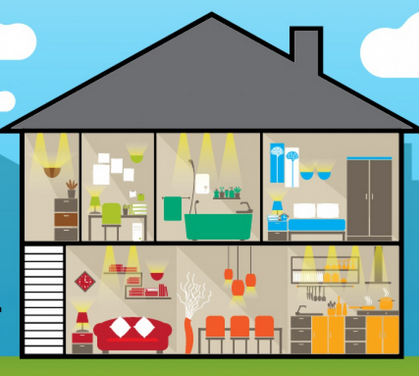
How much have you thought about lighting in your home? Lighting can have an effect on many aspects of the home, including the mood, the atmosphere, and the presentation of the furniture and other items in your home. To produce the most effective lighting, let's explore how it can be used in different situations throughout the home.
First of all, there are three types of lighting uses: general, task, and accent. General lighting is what you expect it would be, just to generally light up the room and make things visible. Task lighting more localized, designed to illuminate places that need every bit of light, like bathroom mirrors, reading nooks, or food prep places. Accent lighting is the most home decor-esque lighting, as it is used to bring drama to the room and highligh focal points. All three should be designed to work effectively with each other.
Now, let's go through the various rooms we need to light and investigate how lighting can be manipulated to produce the appropriate effect in each. First, we'll look at entrances, staircases and landings. In these places, a statement pendant works well for a modern design. For traditional houses, a lantern light or crystal chandelier might be more appropriate. If space is limited, recessed downlights may be a good choice.
In the living room, you'll be using a lot of different types of lighting. A general overhead light is fairly standard for some baseline illumination. For dark corners, floor standing uplighters can softly light them up. A combination of lamps and accent lights will also add to the general decor. You should display your finest prizes in the living room (provided they fit into your theme, of course) and light them with accent lights.
As far as the dining room goes, the main source of light should come from above the table. A positioned ceiling fitment hovering a couple feet above the table is perfect for this task. It will also add to the comfortable feel of the room if you light corner with uplighters or lamps.
The kitchen needs all the light it can get. Use multi-head spotlights to direct light onto work stations. If you need more lighting, you can add some under cupboards or cooker hoods. If you have an island, suspend lights above it to provide adequate illumination as well as make it a great focal point.
We can't forget about the bathroom! For most bathrooms, you don't want to have too bright of light, as this can cause glare on polished surfaces. To avoid this, use diffused wall or ceiling lights. Additionally, a task light above the mirror will ensure maximum illumination in the places it counts.
For more information, including visuals and style tips, check out the infographic below!