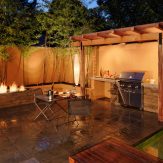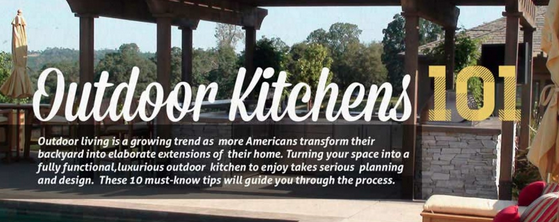
Thinking of building an outdoor kitchen? This post, we have some tips for you to consider before you start in on your project! Keep reading to check them out.
When building your outdoor kitchen, there are some questions you need to ask about your available site location. In addition to answering yes to these 4 questions, you need to make sure you'll be in compliance with local regulations or whether any permits apply. The questions are:
- Can it be connected to the utilities of the house?
- Is it conveniently located in your backyard?
- Is there shelter from the elements, including sun?
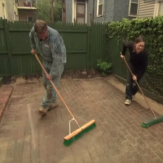
- Can the area be leveled out (if it's already not so)?
As far as the utilities go, make sure you have plenty of electrical outlets installed. You'll need them for lighting up the whole area, including general, task, and ambient lighting. For plumbing, you can hook up both cold and hot water or just leave it with cold. Make sure, too, that your pipes won't bust in the wintertime by winterizing.
There are 4 functional zones in outdoor kitchens: dry zones like countertops and storage, hot zones like grills and cooktops, wet zones like sinks, and cold zones like refrigerators. You'll especially want plenty of room for the dry zones, but make sure you plan room for all 4 of these.
Now you need to decide what equipment you want installed, which will depend on your eating and drinking preferences. For example, you may want any one of a grill, a pizza oven, or a wok station, or perhaps you want all three! Decide what your needs are and how much room you have to fulfill them. Also, decide if you want to include seating at part of the kitchen. If so, you'll need to plan ahead so there is ample room for people's knees.
Outdoor kitchens don't have to be functional for just during parts of the summer! You can extend your use well into autumn and spring through some modifications, like rain shelter, shade, heating, and cooling. These will cost a bit more and be expensive to run too much during extreme weather; on the other hand, they allow you to make use of your kitchen that you invested so much work and money into. You decide!
Take into account some safety considerations as well. First of all, you might be spilling water or grease in the cooking area, so ensure that the walking spaces are slip resistant. Also, have a fire extinguisher accessible in case of emergencies. Another safety measure concerning fire that's a good idea is to install a gas shutoff valve in a place not far from the grill. For nighttime use, you'll want plenty of light, but it can also be useful for making sure no one trips at night. And finally, round off the corners of countertops so nobody hurts themselves on them.
That's all we've got for you for now, but check out the infographic for more information. Good luck with your outdoor kitchen project!